Top Rated in Orange County
Facelift
Facelift Case Studies
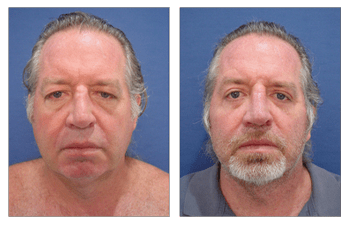
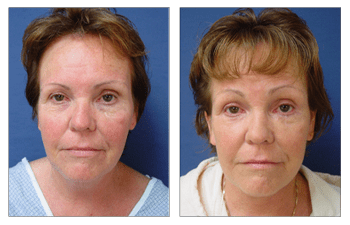
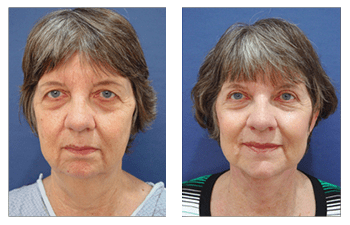
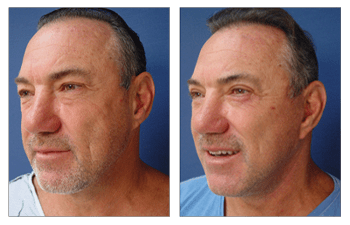
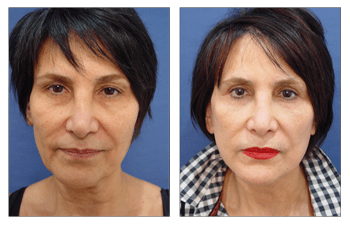
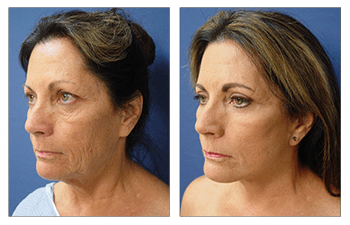
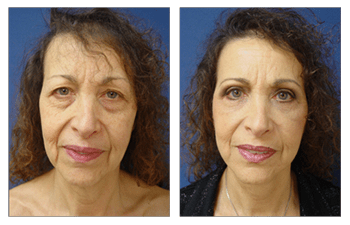
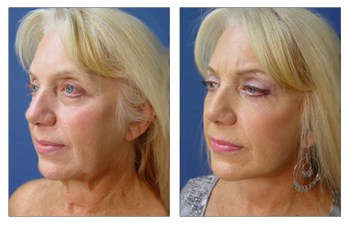


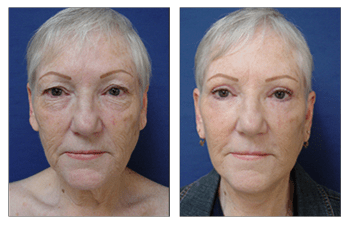
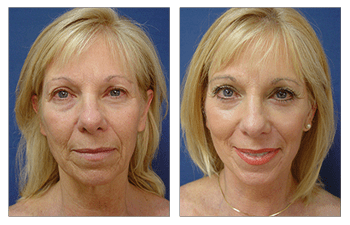

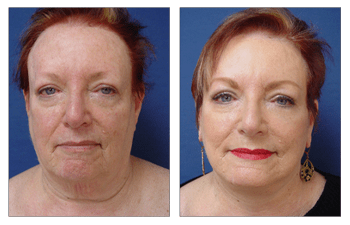
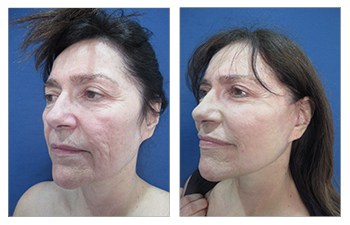
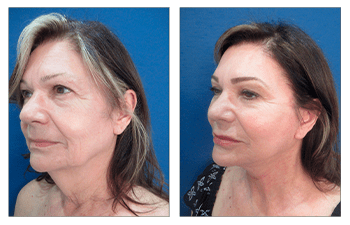
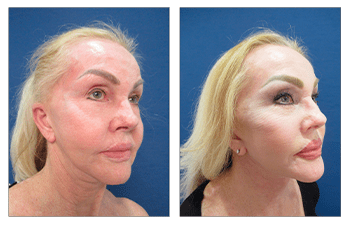
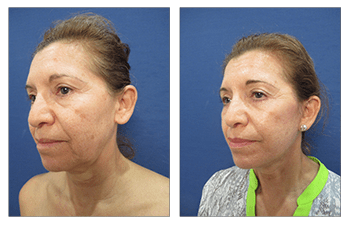
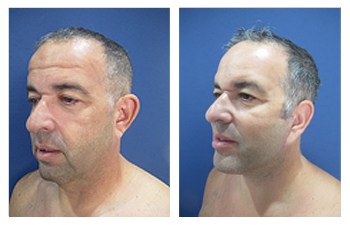
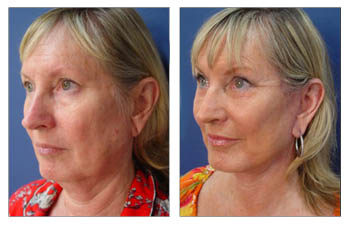
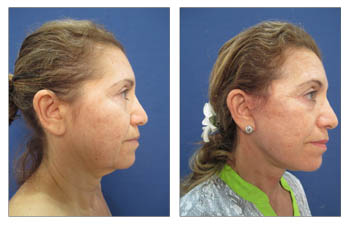

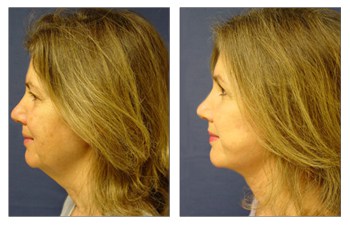
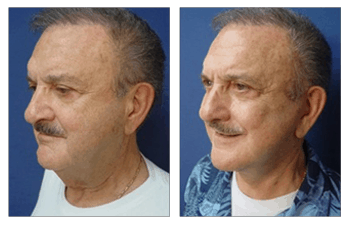
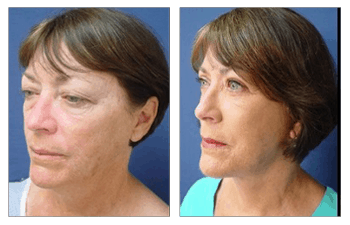

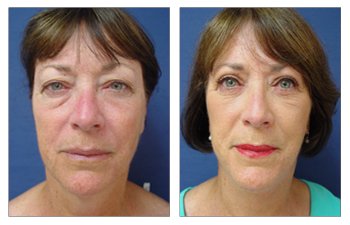
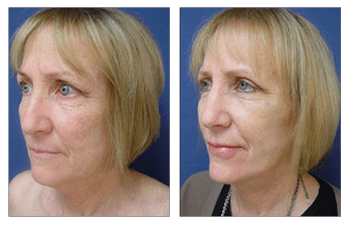
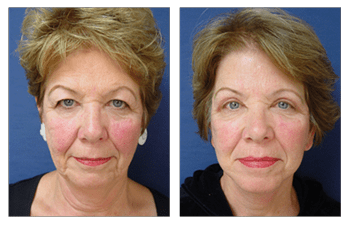
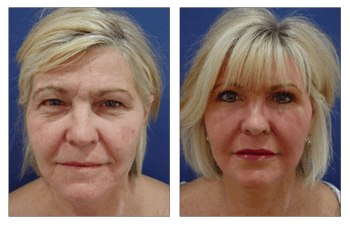


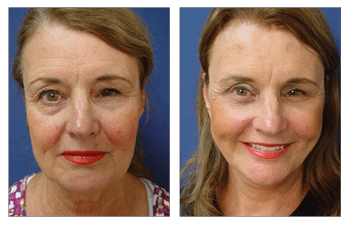
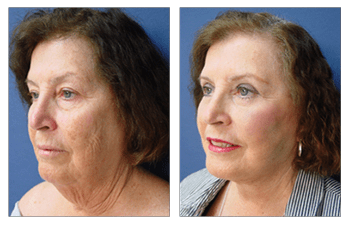
Facelift
When considering facial aging changes we must consider not only gravitational forces but also the trend of facial fat volume loss with advancing age. In fact, facial aging signs related to skin redundancy and skin sagging are promoted more from loss of volume than the forces of gravity.
Men and women who consider facelift surgery in Orange County often do so as aging changes associated with gravity cause laxity in the skin to develop, resulting:
- Jowls – drooping of skin that bunches along the jawline
- Marionette lines which are semicircular wrinkles surrounding the mouth
- Submental redundancy – fullness in the neck, especially under the chin
These changes are further compounded by the effects of fat loss resulting in:
- Prominent nasojugal grooves – hollowness stretching from the lower eyelids to the mid-cheek
- Prominent nasolabial folds – skin wrinkling extending down from the lateral nose.
In summary, patients express a concern of bunching up of their tissues along the lower face and neck with simultaneous loss of volume in the mid and upper cheek.
So what is facelift surgery? To optimize facelift results, Dr. Paris uses a combination of:
- The extended SMAS dual-plane facelift using two separate layers of lift which is critical to achieving non-operated, natural results by minimizing tension on the outer, skin layer
- Fat grafting transfer to the central and upper cheek region to replace volume loss.
Using these specialized techniques,Dr. Parisi transforms an aged “spade: ♠” shaped face into a youthful “heart: ♥” shaped face.
We encourage you to view Dr. Paris’s facelift before and after results in order to appreciate why he is well regarded for natural and long-lasting facelift results and why he is trusted by celebrities and politicians alike.
What is the SMAS?
The SMAS is an acronym that describes the muscle lining that covers the facial and neck muscles and stands for Superficial Muscular Aponeurotic System and describes this muscle lining.
When undermined as a secondary layer it results in not only the tightening of the underlying muscles, but it also helps hoist up the overlying skin so that minimal leverage is placed on the skin layer. This advantage has several consequences including:
- A smooth contour void of contour irregularities
- A non-operated, natural facial appearance
- Avoidance of tension on incision lines that heal without a scar
- A more comprehensive and permanent two-layer pull
Facelift Cost in Newport Beach
The cost of a facelift in Orange County can vary greatly from one surgeon to another. One of the reasons for this cost variance is the surgeon’s expertise in lifting the drooping soft tissues and restoring loss of facial volume.
At Cosmetic Plastic Surgery Institute, Dr. Paris utilizes the gold standard extended SMAS dual plane approach that lifts the droopy skin and underlying soft tissue layers separately. Dr. Paris often makes an analogy to a properly made bed: you cannot pull the bedspread cover without first tucking in the underlying sheets first. The same is true for a facelift.
An experienced surgeon will leverage the lifting of the drooping face and neck tissues on this underlying layer, called the SMAS, thus avoiding tension and an “operated” look if tension is placed on the outer skin layer. In addition, Dr. Paris specializes in the transfer of fat in patients who have lost volume by using a comprehensive analysis of facial volume losses as well as employing a “minimal transfer time” technique to optimize fat graft take.
The cost of a facelift can range widely due to the rising popularity of “mini-facelifts” or “quick-lifts” that in all actuality provide suboptimal results. These types of “mini-facelifts” generally cost around $6,000 to $8,000.
In contrast, the gold standard extended SMAS, dual-plane facelifts in Newport Beach generally cost between $12,000 to $15,000. We encourage you to consult Dr. Paris prior to committing to surgery as he is well regarded not only for his facelift results but also for his reasonable facelift prices.
We urge you to consider whether a few thousand in savings would be worth a lifetime of poor or short term results. If you look in the mirror and are unhappy with the sagging of your neck and the loose skin around your lower cheeks and mouth, then make a consultation with our expert facelift surgeon.
Facelift Recovery
Our Orange County facelift surgery patients recover in approximately 10 to 12 days. You will experience minimal discomfort as Dr. Paris uses a long-lasting anesthetic that lasts for up to 3 days, which nearly eliminates all of your discomfort.
Although each patient differs from their pain tolerance, Dr. Paris’s patients routinely express that they had no pain with the surgery. Moreover, our Orange County facelift patients are traditionally encouraged to go out to dinner with family and friends as early as 12 days after surgery!
By one month following facelift surgery, you will be able to participate in all sports, go up to the podium for a public speaking engagement, or even get married.
Facelift Before and After Photos
Dr:Mirzania encourages all prospective facelift surgery patients in Newport Beach to examine the surgeon before and after photos with a critical eye.
What is facelift surgery?
- Facelift surgery is designed to correct and restore the facial volume and contours altered by the force of gravity, aging, and loss of facial volume.
- Facelift surgery will eliminate skin redundancy, lift drooping tissues, and replace lost volume.
- Facelift surgery was not designed to make you look like a different or even deformed person.
A great facelift does not leave a patient looking “pulled” or “operated” looking as observed in mini or short cut facelifts. Please examine facelift before and after photos for:
- Overall facial appeal
- Appropriate healing of incision lines
- Tightened neckline
- Chiseled jawline
- A natural, more youthful rejuvenation of your facial features
An expert surgeon, specializing in facelift surgery, will achieve long-lasting and natural results.
The only exception to the dual-plane extended SMAS facelift remains the thread lift which is intended for the younger clients that demonstrate skin sagging but no redundancy.
These clients are typically in their early and mid-forties and demonstrate minimal sagging and minimal to moderate loss of volume. The thread lift is a minimally invasive facial rejuvenation alternative to facelift surgery that can be performed in the office setting without the need for general anesthesia.
The thread lift uses strategically positioned six permanent barbed sutures that are threaded throughout the jaw and cheek to provide lifting of soft tissues without the need for skin and soft tissue undermining. The thread lift has definite limitations in reversing facial aging signs and is indicated only for younger patients who are not prepared for a more invasive facelift.
Procedure
Improvement of facial aging signs including facial wrinkles, prominent laugh lines including those that extend up from your lips (nasolabial folds) and those that extend down from your lips (marionette lines), downturned corner of the lips, deflated and drooping cheeks, bunching at the bottom of the cheeks (jowls), rounded neckline with hanging redundant skin, and drooping and hollowed out lower eyelids.
Length
Ranges between 4 to 5 hours.
Anesthesia
General anesthesia or intravenous sedation for patients with medical problems is recommended.
Place of Treatment
Outpatient surgical suite or hospital operating room.
Side Effects
1) Swelling up to 2 weeks is not uncommon due to the extent of both skin and muscle elevation that is required prior to redraping and trimming of tissues required to eliminate the signs of facial aging.
2) Temporary bruising is often associated with facelift surgery due to the extent of tissue elevation required to obtain long-lasting facial rejuvenation results. Bruising is minimized by the meticulous stoppage of all small bleeding vessels (hemostasis) and by compression dressings utilized postoperatively. Most bruising subsides within 1 to 2 weeks.
3) Temporary facial numbness is a direct result of elevating redundant skin prior to redraping and trimming extraneous skin tissue. As such, disruption of sensory nerves (nerves that help you feel) is unavoidable. Fortunately, patients should expect the full return of facial sensation and resolution of numbness over several months.
Risks
1) Deep vein thrombosis (DVT) may occur in the legs immediately following surgery. DVT refers to the clotting off of leg veins which may result in compromised blood flow return from the legs; a more critical consequence may develop from this clot if it is dislodged and travels to the lungs causing pulmonary emboli. Although rare, pulmonary emboli are the leading cause of major complications following surgeries. Measures are taken intraoperatively to avoid such a complication.
2) Poor facelift scarring is seldom observed when the facial surgical incisions are repaired following a properly performed facelift that utilizes the facial muscle layer to hoist up the skin layer. By placing the tension on the facial muscle layer, the skin layer is redraped gently without undue tension which results in well healed and hidden incision lines. Patients who smoke are prone to poor scarring and are asked to stop smoking for 4 weeks prior to and 6 weeks following surgery.
3) Local skin infection is uncommon and associated with individual patients with poor healing tendencies secondary to medical illnesses. Diabetes, nutritional deficiencies, and smoking are to blame for local skin infections. Well-controlled sugar levels in diabetic patients, optimizing nutrition, and cessation of smoking are critical to avoiding infections.
4) Skin tissue compromise leading to skin loss is rare following facelift surgery and is associated with smokers. Smokers are asked to stop smoking for 4 weeks prior to and for 6 weeks following surgery. If patients are unwilling to stop smoking, then patients are recommended to undergo mini facelift surgery which minimizes skin elevation in order to maximize the preservation of skin vascularity.
5) Muscle function deficit is a rare risk of facelift surgery and is caused by inadvertent injury to motor nerves which are motor muscles. This complication is minimized by patients choosing surgeons who have appropriate training and experience performing facelift surgery.
Recovery
The recovery period for facelift surgery with a return to most daily activities is usually 10 days. Patients are asked to forego physical activities and exercise for approximately 4 weeks until facial suture lines are healed. Finally, patients are asked to forego important social engagements for approximately 6 weeks until all surgical incisions have healed and are no longer red (hyperemia).
Duration of Results
Patients who have undergone facelift surgery can expect aesthetically pleasing results for life. Early revisions are rare and are typically discouraged. Patients will notice turning back of the clock of approximately 15 years following facelift surgery and will notice a natural return of the aging process.
FREQUENTLY ASKED QUESTIONS
What is the history of facelift surgery?
The first reported facelift surgery, involving elevation of the muscle layer in addition to the skin layer, termed the extended SMAS technique, was first described by Dr. Skoog as late as 1974. The extended SMAS facelift is regarded as the state of the art in facelift technology allowing for effective facial rejuvenation without the telltale signs of facelift surgery.
By using this technique, surgeons are able to utilize aggressive pull on the elevated muscle layer to hoist the skin layer in order to minimize undue tension on the pull of the skin layer. By minimizing the pull on the skin layer, redundant skin can be eliminated without an unnatural result often termed as the “windblown” look.
Am I a good candidate for facelift surgery?
Good candidates for facelift surgery demonstrate a multitude of facial aging changes. Facial aging changes have been classified by “age decade” interval changes. In the 30 to 40-year range, patients will notice the appearance of upper and lower eyelid skin redundancy. Some patients may notice hollowed out lower eyelids as the cheek tissues begin their descent down the face. Over the out edge of their eyelids, patients will also notice wrinkles called Crow’s feet (name based on observed pattern).
Between 40 and 50 years, patients will notice more generalized facial wrinkles and more prominent folds around the lips. Theses laugh line folds extend upward (named nasolabial folds) and extend downward (named marionette lines). Some patients will notice their jawlines become less distinct. In 50 to 60 years, patients will notice an increasing the deepening of the wrinkles and folds. Patients will notice poorly defined jawlines as the cheek tissue bunch just outside the marionette lines and rounding of the neckline.
In 60 to 70 years, patients will notice exaggeration of all of the above signs as well as the increasing hanging of the neck skin which may obscure the chin and jawline.
What does facelift surgery involve?
Facelift surgery involves elevating the skin and muscle layer in order to redrape and trim redundant facial tissues that have sagged secondary to the effects of gravity and facial aging. The gold standard in facelift surgery is called the extended SMAS technique facelift surgery and utilizes extended muscle elevation (called the SMAS) in addition to fixing the elevation of the skin.
By lifting the deeper muscle layer, the surgeon is able to hoist and eliminate the sagging and redundant facial tissues including the skin and fat tissues without placing undue tension on the actual skin tissue layer. By minimizing tension on the skin layer, patients can expect more natural results with optimum healing of surgical incision lines.
Finally, appropriately placed incision lines and meticulous repair of surgical incision lines will ensure well-hidden surgical scars.
How do I plan for facelift surgery ?
On your initial visit, your surgeon will evaluate your health status by obtaining blood work. If you are 50 years or older you will need to have an EKG of your heart to rule out any heart conditions.
If you are a smoker, you should quit for 1 month prior to your facelift surgery to minimize the risks of skin compromise especially if your surgery will require removal of significant redundant skin. In addition, it is prudent to quit smoking for 6 weeks following surgery to ensure a well-healed surgical incision.
Finally, you will need to arrange for a friend if you don’t have a spouse to care for any small children who may need to be lifted or carried as any lifting increases the head pressures and increases the risk of bleeding.
How do I prepare for facelift surgery?
Since your surgery will require general anesthesia, you must take several precautions prior to surgery.
First, you will have to avoid eating and drinking after midnight on the day before surgery. This precaution ensures that your stomach is clear of digested foods that could potentially be aspirated and contaminate your lungs during the induction of anesthesia.
Since you will have anesthetic medications administered throughout the process, you will remain groggy for several hours and will require a ride to and from the surgery center. You should choose a caretaker who is conscientious and who can spend the first night with you.
What results can I expect after facelift surgery?
Patients who undergo facelift surgery are extremely satisfied with their surgery and their more youth appearing faces. By providing a thorough preoperative workup, safe intraoperative course, and frequent postoperative visits, patients should expect a speedy recovery and return to a more aesthetically pleasing and youthful neck and facial contour. Patients are extremely pleased following facelift surgery and demonstrate increased physical and mental confidence.
Where will my facelift surgery be performed?
Since facelift surgery will require general anesthesia or intravenous sedation, it must be performed in an operating room that is part of a hospital institution or outpatient surgery center.
Less frequently, patients may be operated on in an in-house office-based operating room, but it is of utmost importance for patients to make sure that the office facility is accredited by a surgical accreditation body such as AAAASF.
What type of anesthesia will be used for my facelift surgery?
For the gold standard facelift surgery (extended SMAS technique) general anesthesia or intravenous sedation is required. This is because in order to appropriately pull the muscle layer in addition to the skin layer, local anesthetic solution alone will not suffice.
What should I expect after facelift surgery?
Patients will awaken from general anesthesia or intravenous sedation to find their face covered by a bacitracin ointment and their neck and ears covered by a compression dressing. The compression dressing ensures the maintenance of an even facial and neck contour and avoidance of blood or plasma filled pockets postoperatively.
In addition, patients will have drain lines placed to avoid blood or plasma filled pockets postoperatively; these drains are removed within 24 to 48 hours following surgery.
At your postoperative visit at 1 week following surgery, your compression garment will be removed and stitches along your ear will be removed.
At 10 days following surgery, sutures under your chin and along the back of your ear and neck will be removed. Swelling and bruising is typically minimal and resolves over the first week following surgery. Arnica gel is recommended for patients demonstrating increased bleeding in order to avoid excessive postoperative bruising.
Patients are asked to avoid lifting weights greater than 15 pounds for the first two weeks. Additionally, patients are asked to strenuous physical activity for the first 4 weeks in order to avoid compromising their results. Patients can expect full recovery at one month following surgery. Patients may even schedule important social engagements as early as 6 weeks following surgery.
When will I be able to return to work following facelift surgery?
Patients can expect to return to work at 10 days following surgery if they work in the back office and do not have to be fully presentable. For patients who deal with consumers or are in sales, 2 to 3 weeks off of work may be more prudent. Finally, if patients have physically strenuous jobs, then one month of downtime is recommended prior to return to work.
Are there any side effects associated with facelift surgery?
There are several side effects that have been associated with facelift surgery and included:
a) Prolonged swelling up to 2 weeks is not uncommon due to the extent of both skin and muscle elevation that is required prior to redraping and trimming of tissues required to eliminate the signs of facial aging.
b) Temporary bruising is often associated with facelift surgery due to the extent of tissue elevation required to obtain long-lasting facial rejuvenation results. Bruising is minimized by a meticulous stoppage of all small bleeding vessels (hemostasis) and by compression dressings utilized postoperatively. Most bruising subsides within 1 to 2 weeks.
c) Temporary facial numbness is a direct result of elevating redundant skin prior to redraping and trimming extraneous skin tissue. As such, disruption of sensory nerves (nerves that help you feel) is unavoidable. Fortunately, patients should expect the full return of facial sensation and resolution of numbness over several months.
d) Prolonged swelling up to 3 months is not uncommon due to poor lymphatic drainage especially following open rhinoplasty. Lymphatic drainage is compounded by extended surgical incisions used in open rhinoplasty and placed across the bottom of the nose (columella) when the nasal tip must be altered.
e) Surgical scar redness: Hyperemia of the incision around the ear and neck is to be expected and will resolve over the first month. Layered closure of the incision line is performed in order to minimize the tension of the incision line and to enhance incision healing. In addition, by utilizing the underlying muscle to hoist the redraped skin, the tension on the skin incision line is further reduced. Finally, avoiding cigarette smoking for one month prior to surgery and six months following surgery is essential to optimizing healing.
Are there any risks associated with facelift surgery?
a) Postoperative bleeding may occur following facelift surgery since the face has numerous blood vessels supplying it. Patients are tested preoperatively to ensure that they do not have a bleeding disorder. For patients identified as having a bleeding tendency, intraoperative administration of DDAVP (a blood clotting factor) is administered to avoid bleeding complications. Appropriate clotting of facial vessels (hemostasis) during the operation avoids postoperative bleeding. In addition, external compression provided by the neck binder further prevents postoperative bleeding.
Finally, patients are asked to avoid straining, lifting, and pushing over the first two weeks following surgery in an attempt to minimize increasing head pressures which may induce bleeding.
b) Deep vein thrombosis (DVT) may occur in the legs immediately following surgery. DVT refers to the clotting off of leg veins which may result in compromised blood flow return from the legs; a more critical consequence may develop from this clot if it is dislodged and travels to the lungs causing pulmonary emboli. Although rare, pulmonary emboli are the leading cause of death following surgery. Measures are taken intraoperatively to avoid such a complication.
c) Poor facelift scarring is seldom observed when the facial surgical incisions are repaired following a properly performed facelift that utilizes the facial muscle layer to hoist up the skin layer. By placing the tension on the facial muscle layer, the skin layer is redraped gently without undue tension which results in well healed and hidden incision lines. Patients who smoke are prone to poor scarring and are asked to stop smoking for 4 weeks prior to and 6 weeks following surgery.
d) Local skin infection is uncommon and associated with individual patients with poor healing tendencies secondary to medical illnesses. Diabetes, nutritional deficiencies, and smoking are to blame for local skin infections. Well-controlled sugar levels in diabetic patients, optimizing nutrition, and cessation of smoking are critical to avoiding infections.
e) Skin tissue compromise leading to skin loss is rare following facelift surgery and is associated with smokers. Smokers are asked to stop smoking for 4 weeks prior to and for 6 weeks following surgery. If patients are unwilling to stop smoking, then patients are recommended to undergo mini facelift surgery which minimizes skin elevation in order to maximize the preservation of skin vascularity.
f) Muscle function deficit is a rare risk of facelift surgery and is caused by inadvertent injury to motor nerves which motor muscles. This complication is minimized by patients choosing board-certified plastic surgeons who have appropriate training and experience performing facelift surgery.
PATIENT-SPECIFIC QUESTIONS
How does the thread lift or lunch time facelift differ from the traditional extended SMAS facelift?
The thread lift or lunchtime facelift utilizes a barbed string that is inserted at various points around the central face and then pulled out laterally into the hairline in an upward direction.
This facelift technique is not considered to be an effective facelift technique by the plastic surgery community. This is because this technique acts like a hoist which inevitably falls back down. Even experts of this technique admit that the results are temporary and last no longer than a year.
In contrast, the traditional extended SMAS facelift allows for elevation and redraping of both the muscle and skin layers which results in permanent correction of the facial aging signs.
How does the Lifestyle lift differ from the traditional extended SMAS facelift?
The Lifestyle lift differs from the traditional extended SMAS facelift in that it only includes elevation and redraping of the skin layer and only hoisting of the muscle layer. Similar to the thread lift, the Lifestyle lift does not allow for a permanent lift of the muscle layer and thus compromises overall results.
By not performing an appropriate pull of the muscle layer, the entire pull of the face gets transferred to the skin layer. This results in increased tension of the skin incision line and resultant poor scars along the ear and neck.
In contrast, the extended SMAS facelift allows for elevation and redraping of both the muscle and skin layers which results in suspension of the skin layer by the tightly pulled muscle layer but a gently redraped skin layer.
An analogy that describes the extended SMAS technique is the making of your bed where the bedsheet (the muscle layer) has to be pulled first before pulling the bedspread (the skin layer). This minimizes the tension on the skin closure thereby optimizing surgical scar healing and results. When performed appropriately, facelift surgery should result in the correction of facial aging changes but not result in the “operated look”.
What is the youngest age that facelift surgery should be performed?
The majority of patients will observe facial aging changes between 40 and 70 years of age. Occasionally, patients in their late 30s are observed to have facial aging changes due to poor aging genetics.
How do you avoid the windblown look?
The windblown look results from unnecessary pull and tightness of the skin layer when trying to redrape the facial tissues to reverse the facial aging changes. The extended SMAS facelift was developed specifically to avoid the windblown look.
The name of this surgical technique refers to the fact that an extended undermining of the underlying muscle layer (the SMAS layer) allows for the pull on the facial structures especially the redundant skin to be placed on this undermined muscle layer. This important distinction allows for minimizing the tension on the skin despite being able to trim all excess skin.
What areas in the face can you help with a facelift surgery?
There are several signs of facial aging and these include:
- A prominent laugh line that extends up from the corner of your lips (nasolabial crease)
- A prominent laugh line that extends down from the corner of your lips (marionette lines)
- Downturned corner of the lips, facial wrinkles
- Deflated and drooping cheeks
- Bunching at the bottom of the cheeks (jowls), rounded neckline with hanging redundant skin
- Drooping and hollowed out lower eyelids
All of these areas are effectively aided by a facelift procedure which will soften all wrinkles and folds, lift all droopy tissue to their pre-aging site, tighten the neck, and improve the lower eyelid contour.
Can you combine facelift surgery with other surgeries?
Facelift surgery can be combined with several complimentary procedures including lifting of the brow (browlift), tucking of the upper and lower eyelids (quad blepharoplasty), fat grafting of the cheeks and lower eyelids (replaces the deflated look), and facial laser resurfacing to eliminate fine wrinkles (Erbium laser facial resurfacing).
What are the give away signs of a facelift and how do you avoid them?
There are several “give away” signs of a facelift, but these signs when present are a tip-off of a poorly performed facelift.
These include the overly pulled, “windblown” effect that is caused by the inappropriate direction of pull as well as overly tightened skin pull. By appropriately pulling the skin with a tight muscle pull it is possible to achieve appropriate tightening of the skin without this “give away” sign.
In addition, poorly placed and repaired incision lines along the ear and neck can result in “give away” signs of a poorly performed facelift. In-setting of the skin following trimming of the skin is an art that requires meticulous attention to detail and the use of layered closure technique. In addition, by avoiding overly tightened skin flaps by transferring the tension to the muscle layer allows for the healing of non-detectable incision lines.