
Top Rated in Orange County
Otoplasty
Otoplasty CASE STUDIES
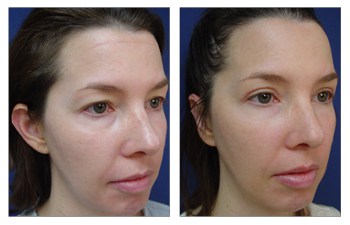
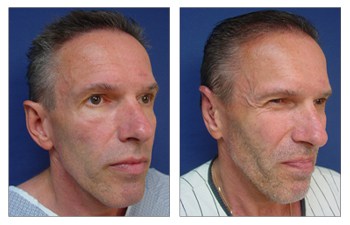
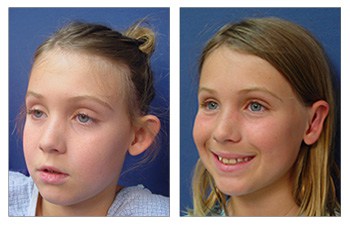
otoplasty Surgery CASE STUDIES
Otoplasty
Otoplasty or Ear Tuck surgery has been developed to address irregularities in ear contour that can be aesthetically displeasing or even have psychological effects on children as they are growing up. These irregularities have been defined and include:
- Large or asymmetric ears
- Protruding ears
- Abnormally shaped ears
The specific causes of ear deformity have been defined, and each has specific maneuvers for correction. To begin, let us review the anatomy of the ear.
A protruding ear or dumbo ear is caused by a poor bend of the antihelix such that the helical rim and the scapha protrude out; think of the antihelical fold not being bent back. This will cause the helical rim and scapha to stick out. Another cause of a protruding ear is a prominent lateral conchae as it extends laterally up to the anti-helical fold; When the lateral aspect of the conchae is prominent, this can also lead to a protruding ear. As such, the treatment for a protruding ear is typically a combination of removing excess conchal bowl to allow the ear to set back or bending the antihelical fold so that you have a sharper angle fold so that the helical rim bends back toward the head. In order to create a stronger or more acute fold of the antihelix, the antihelical fold is rasped to soften the cartilage and sutured to maintain the desired fold angle. All incisions are placed on the back of the ear in the posterior auricular sulcus, thus hiding any visual signs of ear corrections hidden. If you are concerned about the shape of your or your child’s ear, please contact Mirzania for a complimentary consultation.
| Procedure: | Correction of protruding, large, and/or abnormally shaped ears by a) making incisions at the natural fold behind the ears, or at the front of the ears, b) trimming and reshaping the cartilage (supportive tissue of the ears) if necessary, and c) removing excess skin if necessary |
| Length: | On average 1.5 to 2.5 hours, but will vary depending on the complexity of the surgery and if multiple surgeries are required |
| Anesthesia: | Local anesthesia and intravenous sedation or general anesthesia |
| Place of Treatment: | Office-based surgical facility, outpatient surgical facility or a hospital operating room |
| Side Effects: | a) Numbness/altered sensation: Patients usually experience a temporary loss of sensation around the ears after surgery. It is common for the numbness to last for a few days up to a few months after surgery because the nerves around the ears may take a while to regenerate. In rare cases, the altered/loss of sensation may become permanent.
b) Bruising/Swelling: Most patients experience mild bruising and swelling that lasts for the first few days after surgery. Any related pain is treated with pain medication that is prescribed by your surgeon. c) Scarring: Scarring usually occurs after ear surgery, but can fade into inconspicuous thin white lines. Furthermore, the incision lines for ear surgery are placed at the natural folds of the ear, which makes any scarring barely visible. d) Ear asymmetry: An uneven appearance of the ears may result if the ears are asymmetric preoperatively. Although the surgeon makes all attempts to sculpt the ear cartilage intraoperatively to compensate for any asymmetry, patients with significant preoperative asymmetry may demonstrate residual asymmetry. Ear asymmetry may be corrected by additional revision surgery. |
| Risks: | a) Pulmonary embolism: Blood clots may form in leg veins during any surgery when the patient is under general anesthesia. Patients with a leg vein clot will complain postoperatively of pain in their calves. Patients with this complaint should be taken seriously and treated if a vein clot is diagnosed. Early treatment of patients with a deep leg vein will avoid migration of leg vein clot to the heart and lungs causing pulmonary embolism. Even though pulmonary emboli are rare, pulmonary emboli are the leading cause of death after surgery. Pulmonary emboli must be detected early by performing a CT Scan and should be treated urgently.
b) Hematoma: Hematoma refers to the accumulation of blood in the early postoperative period which pools into a pocket. Hematomas provide a perfect medium for harboring growth of bacteria. So if you have an infection anywhere in your body, the bacteria will travel through the bloodstream and grow in the hematoma; this can lead to an infection as well as an open wound. In order to avoid a hematoma, drains are placed in surgery so that any fluid accumulation can be drained. Drains are usually kept in place for 4 to 5 days. c) Seroma: Seroma formation refers to the accumulation of plasma fluid in pockets created by surgical elevation of the soft tissue and disruption of lymphatic vessels. This fluid accumulates due to a low blood count and protein deficiency both of which may be present in breast lift surgery patients. This fluid can be a nuisance to patients requiring several aspirations in the office prior to their resolution. More importantly, these plasma fluid pockets may harbor bacterial growth and result in a clinical infection. Drains which are placed in surgery are very effective in preventing seroma formation. Consequently, seromas may become apparent following premature removal of drains. d) Infection: An infection can occur following ear surgery. The infection will disrupt the incision line and may leave the patient with an open wound. Prolonged antibiotics are required to fight the infection and to prevent further extension of the infection. Infections are usually avoided by using drains which will prevent hematoma formation. In addition, infections are less likely in patients who do not smoke cigarettes or in patients who quit smoking for at least 1 month prior to surgery. e) Skin edge death/open wound: The skin incision can be disrupted if the skin edge dies or if there is local infection. This complication is best avoided by counseling patients on the terrible consequences of nicotine in cigarettes. Nicotine will literally clog all the small vessels found in the skin which are critical for the healing of the skin edge. Ear surgery patients are usually mandated to quit smoking for at least 1 month prior to surgery. In addition, uncontrolled diabetes can lead to the undesired sloughing of the skin. Diabetic patients are urged to be vigilant about controlling their blood sugar levels prior to surgery. If patients develop an open wound, they will require prolonged local wound care with frequent dressing changes. Unfortunately, any delays in healing of the skin edges will compromise your aesthetic outcome. |
| Recovery: | Most patients can resume normal activities within 10 days and return to work between 7 to 10 days after surgery. However, patients should avoid strenuous activities such as bending, straining and heavy lifting for 6 weeks after surgery. |
| Duration of Results: | Ear surgery offers permanent and almost immediate correction of protruding, large and/or abnormally shaped ears. Most patients are extremely satisfied with their results and enjoy a lifetime of aesthetically pleasing ears. |
FREQUENTLY ASKED QUESTIONS
Am I a good candidate for ear surgery?
Individuals with protruding, oversized, and/or abnormally shaped ears may benefit from ear surgery. Unattractive or deformed ears could result in teasing and other inconveniences. Ear surgery is recommended for children 5 to 6 years of age, when the ear has become fully developed. Early intervention could prevent children from developing self-consciousness and adapt poorly to social situations. There is no upper age limit for ear surgery, and the procedure is suitable for individuals in good general health, both physically and emotionally.
What does ear surgery involve?
Ear surgery requires incision lines to be made either behind or in front of the ear at the natural folds of the ear to minimize the appearance of scars. Once the incisions are made, your surgeon can begin trimming and reshaping the cartilage and removing excess skin from the ears. Finally, the incisions are sutured and patients are allowed to recover from anesthesia under the supervision of medical personnel.
How do I plan my ear surgery?
On your initial visit, your surgeon will review your medical history and current medications to determine your level of risk for ear surgery. Special health conditions such as high blood pressure, thyroid problems, and diabetes could increase your surgical risks. If you are a smoker, you should quit smoking at least 1 month prior to surgery and 6 months after surgery to ensure proper wound healing. During your first visit, you will also be asked to look in a mirror and let your surgeon know what kind of improvements you would like to be made on your ears. This process will help your surgeon become aware of his goals and let you know if your expectations can be achieved. Finally, you should arrange for someone to drive you to and from the surgery center and stay with you for the first 24 hours following surgery.
How do I prepare for ear surgery?
Since your surgery may require general anesthesia you must take several precautions prior to surgery. First, you will have to avoid eating and drinking after midnight on the day before surgery. This precaution ensures that your stomach is clear of digested foods that could potentially be aspirated into your lungs during induction of anesthesia. Since, you will have anesthetic medications administered throughout the case; you will remain groggy for several hours and will require a ride to and from the surgery center. You should choose a caretaker who is conscientious and who can spend the first night with you.
What results can I expect after ear surgery?
Most patients are extremely satisfied with their results almost immediately after ear surgery. The results of protruding ear correction become apparent once the dressings and bandages are removed. More extensive ear surgery may require multiple surgeries and the desired results will be achieved more gradually. There will be scarring after ear surgery that can be significantly reduced with skin medication. However, the scars often fade into thin white lines and are barely noticeable due to the placement of incisions at the natural folds of the ear. Patients usually become more comfortable in social situations and radiate with confidence after ear surgery.
Where will my ear surgery be performed?
Ear surgeries can be performed at an office-based surgical facility, outpatient surgical facility or hospital operating room depending on the extent of ear correction that is required. Even when performed in the office, patients will be fully monitored and cared for by appropriate nursing staff. If your surgery requires general anesthesia, the procedure must be performed at an outpatient surgical facility or a hospital operating room. It is of utmost importance for patients to make sure that the office-based operating rooms or outpatient surgical facilities have been accredited by a surgical accreditation body such as AAAASF.
What type of anesthesia will be used for my ear surgery?
Depending on the complexity of the surgery, you may require local anesthesia and intravenous sedation or general anesthesia. Local anesthesia combined with intravenous sedation is usually recommended for older children and adults. General anesthesia is usually more suitable for young children who may or may not cooperate during the procedure and could create additional risks during surgery.
What should I expect after ear surgery?Nuper quisque evolvit praebebat turba hunc viseret foret vultus.
Patients will wear soft dressings and/or bandages for the first few days after surgery to ensure that the ears heal in the desired position. You may also wear a ski band to prevent the ears from bending while you sleep. Most patients experience mild bruising and swelling, which usually subside within a few days to a few weeks. You will be prescribed antibiotics and pain medication by your physician to manage any discomfort and promote the healing process.
Patients can resume normal activities within 1 week and return to work within 7 to 10 days following surgery. However, strenuous activities such as bending, heavy lifting and straining should be avoided for 6 weeks. Since incisions are created at the natural folds of the ear, patients will have a thin white scar in a barely visible location after surgery.
When will I be able to return to work following ear surgery?
Most patients can return to work within 7 to 10 days after ear surgery. However, patients with jobs that include strenuous physical activity may require longer work restrictions because patients should avoid bending, straining and heavy lifting for 6 weeks following surgery.
Are there any side effects associated with ear surgery?
a) Numbness/altered sensation: Patients usually experience a temporary loss of sensation around the ears after surgery. It is common for the numbness to last for a few days up to a few months after surgery because the nerves around the ears may take a while to regenerate. In rare cases, the altered/loss of sensation may become permanent.
b) Bruising/Swelling: Most patients experience mild bruising and swelling that lasts for the first few days after surgery. Any related pain is treated with pain medication that is prescribed by your surgeon.
c) Scarring: Scarring usually occurs after ear surgery, but can fade into inconspicuous thin white lines. Furthermore, the incision lines for ear surgery are placed at the natural folds of the ear, which makes any scarring barely visible.
d) Ear asymmetry: An uneven appearance of the ears may result if the ears are asymmetric preoperatively. Although the surgeon makes all attempts to sculpt the ear cartilage intraoperatively to compensate for any asymmetry, patients with significant preoperative asymmetry may demonstrate residual asymmetry. Ear asymmetry may be corrected by additional revision surgery.
Are there any risks associated with ear surgery?
a) Pulmonary embolism: Blood clots may form in leg veins during any surgery when the patient is under general anesthesia. Patients with a leg vein clot will complain postoperatively of pain in their calves. Patients with this complaint should be taken seriously and treated if a vein clot is diagnosed. Early treatment of patients with a deep leg vein will avoid migration of leg vein clot to the heart and lungs causing pulmonary embolism. Even though pulmonary emboli are rare, pulmonary emboli are the leading cause of death after surgery. Pulmonary emboli must be detected early by performing a CT Scan and should be treated urgently.
b) Hematoma: Hematoma refers to the accumulation of blood in the early postoperative period which pools into a pocket. Hematomas provide a perfect medium for harboring growth of bacteria. So if you have an infection anywhere in your body, the bacteria will travel through the blood stream and grow in the hematoma; this can lead to an infection as well as an open wound. In order to avoid a hematoma, drains are placed in surgery so that any fluid accumulation can be drained. Drains are usually kept in place for 4 to 5 days.
c) Seroma: Seroma formation refers to the accumulation of plasma fluid in pockets created by surgical elevation of the soft tissue and disruption of lymphatic vessels. This fluid accumulates due to a low blood count and protein deficiency both of which may be present in breast lift surgery patients. This fluid can be a nuisance to patients requiring several aspirations in the office prior to their resolution. More importantly, these plasma fluid pockets may harbor bacterial growth and result in a clinical infection. Drains which are placed in surgery are very effective in preventing seroma formation. Consequently, seromas may become apparent following premature removal of drains.
d) Infection: An infection can occur following ear surgery. The infection will disrupt the incision line and may leave the patient with an open wound. Prolonged antibiotics are required to fight the infection and to prevent further extension of the infection. Infections are usually avoided by using drains which will prevent hematoma formation. In addition, infections are less likely in patients who do not smoke cigarettes or in patients who quit smoking for at least 1 month prior to surgery.
e) Skin edge death/open wound: The skin incision can be disrupted if the skin edge dies or if there is local infection. This complication is best avoided by counseling patients on the terrible consequences of nicotine in cigarettes. Nicotine will literally clog all the small vessels found in the skin which are critical for the healing of the skin edge. Ear surgery patients are usually mandated to quit smoking for at least 1 month prior to surgery. In addition, uncontrolled diabetes can lead to the undesired sloughing of the skin. Diabetic patients are urged to be vigilant about controlling their blood sugar levels prior to surgery. If patients develop an open wound, they will require prolonged local wound care with frequent dressing changes. Unfortunately, any delays in healing of the skin edges will compromise your aesthetic outcome.
PATIENT SPECIFIC QUESTIONS
What is ear surgery?
Ear surgery involves trimming and reshaping cartilage (supportive tissue of the ear) and removing excess skin as necessary in order to correct protruding, oversized and/or abnormally shaped ears. This procedure is commonly performed on both children and adults, and can improve the aesthetic appearance of abnormal ears to promote confidence and eliminate related social problems.
When should cosmetic ear surgery be performed?Nuper quisque evolvit praebebat turba hunc viseret foret vultus.
Parents should only consider ear surgery for their child if their child is in good mental and physical health. Ear surgery is an important decision for both cosmetic and psychological reasons because abnormal ears can result in social trauma and lack of self-confidence. To prevent unwanted stress for their children, parents may have ear surgery performed on their children at a young age. Additionally, ear surgery may yield better results when performed at a young age because children have more flexible and easily shaped cartilage. Since the ears are typically mature enough for operation at 5 to 6 years old, it is recommended that parents bring in their child for a consultation at this time. Adults can also benefit from ear surgery, however firmer cartilage in older patients may allow their surgeon to achieve less dramatic results than in children.
How much scarring will I have?
The incision lines for ear surgery are usually placed at the natural contours of the ear and are barely noticeable after they have fully healed. Furthermore, scarring can fade into thin white lines and be significantly reduced with skin medication. You can predict the way your incisions will heal by examining the appearance of pierced ears if you have them. If you are prone to abnormal scars such as keloid and hypertrophic scars, you may experience more extensive scarring after ear surgery.
Will ear surgery be covered by my health insurance?
Ear surgery is usually considered a cosmetic procedure and is not covered by most insurance policies unless your ears require reconstruction after a traumatic injury. However, ear surgery for young children may be eligible for health coverage in some cases, such as birth defects. You plastic surgeon will help you verify your insurance coverage prior to treatment. However, it is ultimately the patients responsibility to pay for all surgical costs.
Can ear surgery be performed on only one ear?
Yes, less frequently patients may only require ear surgery on one side. However, it is more difficult to correct slight asymmetries when operating on one ear. Therefore, your plastic surgeon may prefer operating on both ears even if the second ear is normal in order to achieve greater symmetry.
Will I be able to wear glasses after ear surgery?
It is recommended that patients avoid wearing glasses for at least 1 month following surgery to ensure that the ears heal in the correct position. Once the wounds have completely healed, patients will have no difficulties with wearing glasses.
Can cosmetic ear surgery damage my hearing ability?
No, cosmetic ear surgery only involves the outer inner and does not cause any damage to inner ear structures that could result in hearing loss.