
breast reconstruction revision Surgery CASE STUDIES


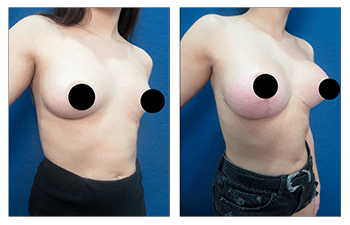

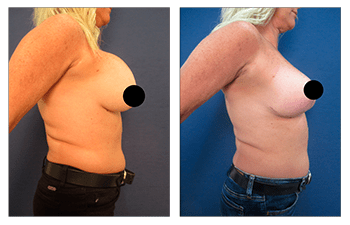
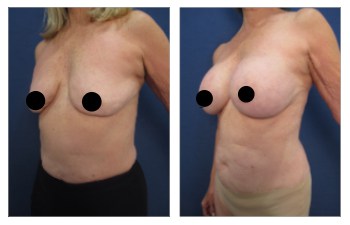


Breast Reconstruction
The art of Breast Reconstruction has undergone several advancements over the last decade resulting in superior breast reconstruction outcomes.
Two important advancements in Reconstructive Breast Surgery have included:
- The advent of superior implant availability
- Biologic skin substitutes.
First, current implant selection has expanded as there are far more implant shapes and sizes available (varied by base width and height projection). This expanded selection of implants allows the surgeon to better match the reconstructed breast to the patient’s original breast shape. The introduction of “gummy bear” implants, implants that are firmer and less prone to wrinkling, has reduced the risk of rippling, or wrinkling of the breast skin; rippling is a term describing contour irregularities frequently observed due to thinning of the breast skin following mastectomies. Second, the use of biologic skin substitutes created from human donors allows the surgeon several advantages not previously available; these include complete coverage of the implant without compromising lower pole fullness and recreation of the inframammary crease (the natural junction between the breast and abdomen) which is violated during the mastectomy. A final advancement in breast reconstruction includes fat grafting, which allows for fine-tuning of breast mound shape.
Although implants provide replacement of the breast mound proper, subtle skin contour irregularities may be created during mastectomy and persist following reconstruction. These subtle skin irregularities can now be corrected with the use of fat material harvested from any area of your choice and molded into your breast skin to smoothen your breast skin contour optimally. Surgeon Dr. Paris is well regarded for his artistry and reconstructive breast surgery outcomes taking advantage of the above recent advances.
Procedure
Restoration of normal breast size, shape, and appearance after removal of one, part of one, or both breasts. Restoration of breasts can be accomplished by two methods and include: a)use of silicone breast implant that is covered and protected by muscle, fat and skin accompanied or human-like synthetic tissue (alloderm versus HD-flex) following expansion of the overlying and remaining breast skin tissue by use of a breast expander, or b)a tissue flap procedure which utilizes a woman’s own muscle, fat and skin from her tummy, back, thighs, or buttocks to create a breast mound. Following reconstruction of desired breast mound and shape, patients undergo nipple-areola reconstruction by local tissue arrangement and skin grafting. Finally, patients who complete unilateral breast reconstruction usually choose to undergo contralateral breast symmetry procedures involving a lift procedure and implant placement.
Length
1 to 6 hours depending on the surgical method and stage.
Anesthesia
General anesthesia.
Place of Treatment
Outpatient surgical suite or hospital operating room.
Side Effects
a) Numbness: Swelling after surgery usually results in loss of feeling in the breast and nipple area during the first several weeks. Tissue flap surgery includes the risk of partial or complete loss of the flap and a loss of sensation at both the donor and reconstructed site. This impairment is typically temporary and resolves within a few months. In rare cases, the loss of feeling can last longer or become permanent due to damage to sensory nerves that are too small to detect by direct vision during surgery.
b) Scarring: Incisions may be lumpy and red for a few months, but incisions become less apparent over time and can even fade to thin white lines. Healing scars can usually be covered by a bra or swimsuit top. It is important to acknowledge that smoking impedes the healing process and will result in more prominent surgical scars.
c) Breast/Nipple asymmetry: Breasts may not be the same size and shape and nipples could be positioned unevenly depending on the degree of preoperative asymmetry and depending on whether a contralateral breast symmetry procedure has been performed.
Risks
a) Hematoma: Hematoma refers to the accumulation of blood in the early postoperative period which pools into a dissected pocket. Hematomas provide a perfect medium for harboring the growth of bacteria. In fact, if the patient has an infection anywhere in the body, the bacteria will travel through the bloodstream and resettle in the hematoma; this can lead to an infection and subsequent wound development. In order to avoid a hematoma, drains can be placed in surgery so that any fluid accumulation can be drained. Drains are usually kept in place for 1 to 2 weeks. In addition, patients are evaluated preoperatively to make sure that they do not have a blood clotting deficiency.
b) Seroma: Seroma formation refers to the accumulation of plasma fluid in pockets created by the surgical elevation of the soft tissue and disruption of vessels. This fluid may accumulate if the patient’s blood count is low and/or the patient’s nutrition poor. When nutrition is poor, protein levels in the blood are diminished which promotes leakage of this fluid out of vessels. This fluid can be a nuisance to patients often requiring several aspirations in the office prior to its resolution. More importantly, these plasma fluid pockets may harbor bacterial growth and result in a clinical infection. Drains can be placed in surgery and are very effective in preventing seroma formation.
c) Infection: An infection can occur after breast reconstruction surgery especially when expander implant reconstruction is used. An infection may result in disruption of surgical incision lines and may leave the patient with an open breast wound. When implant expander reconstruction is performed an infected implant may be extruded. Prolonged antibiotics and possible removal of antibiotics may be required to fight infection and to prevent further extension of the infection. The risk of infections is avoided by using the sterile technique, using intra-operative antibiotics, and sealing all incisions sites so that bacteria can’t get in through external contact. In addition, infections are less likely in patients who don’t smoke cigarettes or in smokers who quit smoking for at least 1 month prior to surgery. If an infection occurs and the implant has been removed, the patient’s reconstruction will be delayed by at least 3 months.
d) Pulmonary embolism: Blood clots may form in leg veins during any surgery when the patient is under general anesthesia. Patients with malignancy such as in patients with breast cancer have a higher risk of clot formation. Patients with a leg vein clot will complain postoperatively of pain in their calves. The patient with this complaint should be taken seriously and treated if a vein clot is diagnosed. Early treatment of patients with a deep leg vein will avoid migration of leg vein clots to the heart and lungs causing a pulmonary embolism. Even though pulmonary emboli are rare, pulmonary emboli are the leading cause of death after surgery. Pulmonary emboli must be detected early by performing a CT Scan and should be treated urgently.
e) Tissue death (necrosis): Following mastectomy, portions of the breast tissue may become compromised due to overly thinning of the breast skin flaps created during the mastectomy. In addition, when tissue flap reconstruction is utilized, it no uncommon to lose a portion of the transferred fat and skin. This complication will result in secondary procedures which will require debridement of compromised tissues and revision of surgical incision lines.
f) Capsular contracture: Capsular contracture causes the breast to feel hard and is caused by the hardening of a scar around a foreign body such as a breast implant. Although this scar formation is expected and a natural process that occurs when expander implant reconstruction is utilized, when the scar is overly thickened and hardened it results in breast hardening and is characterized as capsular contracture. Patients who develop capsular contracture will require further surgery to either release the scar or to remove the scar entirely.
Recovery
Patients can usually resume normal activity around 2 weeks following expander implant reconstruction and 4 to 6 weeks following tissue flap reconstruction. In general, patients should refrain from strenuous physical activity such as heavy lifting, pulling, and pushing over the first 4 weeks following surgery. Less recovery time is required following each subsequent surgery following the initial surgery.
Duration of Results:
Breast reconstruction results can be expected to last a lifetime. However, patients may have significant physiological changes such as excessive weight gain or loss of following pregnancy which will result in breast contour changes. In addition, the patient may require long term revision surgery following unilateral breast reconstruction since bilateral breasts will have different compositions of native breast tissue to implant ratio and will thus be affected by gravity variably. Finally, when breast implants are used, there is a risk of capsular contracture which will require further surgery.