
Top Rated in Orange County
Chin Augmentation
Chin Augmentation CASE STUDIES
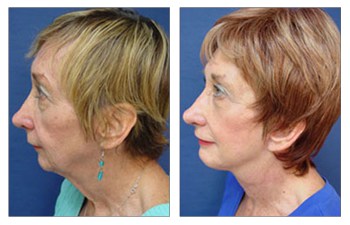
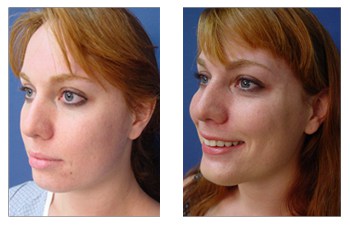
chin augmentation Surgery CASE STUDIES
Chin Augmentation
Chin augmentation involves altering both the shape and projection of your chin to improve chin aesthetics. Orange County chin augmentation surgery can provide you with a permanent enhancement of your chin appearance as well as improve your overall facial balance, especially from the side. Patients are usually ecstatic with their chin augmentation results and enjoy a lifetime of improved chin shape after a short recovery period.
Chin augmentation is performed using a silicone implant placed over the most inferior anterior aspect of the bony chin through a small incision in the natural shadow of the neck (submental region). Silicone chin implants are safe, and made from medical-grade materials that look and feel natural. Chin implants are variable in both projection and width, allowing your surgeon to alter both chin projection and shape to meet your specific needs. A complimentary consultation with Dr. Paris will allow you to explore whether a chin implant is appropriate for you.
| Procedure: | Chin augmentation by insertion of a silicone facial implant in order to correct sagging skin of the chin area and improve the overall shape and balance of the face and neck. |
| Length: | 30 minutes to 1 hour |
| Anesthesia: | General anesthesia or intravenous sedation |
| Place of Treatment: | Office-based surgical facility, outpatient surgical facility, or a hospital operating room |
| Side Effects: | a) Bruising/Swelling: Temporary bruising and swelling usually occurs after surgery and greatly diminishes within a few weeks after surgery.
b) Numbness: Patients may have a temporary loss of sensation in the chin due to swelling after surgery. The numbness usually disappears within a few weeks after surgery. In rare cases, the numbness may become permanent as a result of direct injury to the chin sensory nerve (mental nerve). c) Scarring: Incisions may be lumpy and red for a few months, but incisions become less apparent over time and fade to a thin white line. It is important to acknowledge that smoking impedes the healing process and will result in more prominent surgical scars. Visual scarring can be avoided by using an intra-oral approach; however, this approach is associated with increased risk of chin numbness and implant infection. d) Asymmetrical chin: An uneven appearance of the chin may result if the chin is asymmetric preoperatively. Although the surgeon makes all attempts to sculpt the implant intraoperatively to compensate for any asymmetry, patients with significant preoperative asymmetry may demonstrate residual asymmetry. |
| Risks: | a) Damage to the teeth is rare but possible.
b) Migration of the implant: The chin implant may shifted from its chosen and placed position. When implant migration occurs it is usually caused by an over dissected pocket which allows the implant to migrate from its desired position. This complication can be avoided by placing a small suture through the implant and securing it to the bony lining. This complication will result in revision surgery to replace the implant and fine tune the pocket position. c) Pulmonary embolism: Blood clots may form in leg veins during any surgery when the patient is under general anesthesia. Patients with a leg vein clot will complain postoperatively of pain in their calves. Patient’s with this complaint should be taken seriously and treated if a vein clot is diagnosed. Early treatment of patients with a deep leg vein will avoid migration of leg vein clot to the heart and lungs causing pulmonary embolism. Even though pulmonary emboli are rare, pulmonary emboli are the leading cause of death after surgery. Pulmonary emboli must be detected early by performing a CT Scan and should be treated urgently. d) Infection: An infection can occur after chin augmentation surgery. An infection may result in disruption of surgical incision lines and may leave the patient with an open wound. Prolonged antibiotics and possible removal of the implant may be required to fight an infection and to prevent further extension of the infection. Risk of infection is minimized by using sterile technique, using intra-operative antibiotics, and sealing all incisions sites so that bacteria can’t get in through external contact. In addition, infections are less likely in patients who don’t smoke cigarettes or in smokers who quit smoking for at least 1 month prior to surgery. Finally, chin implant infection can be minimized by avoiding brushing of teeth over the first week following surgery. |
| Recovery: | Patients may feel sore and fatigued for the first day or two after surgery. Patients can usually resume light activity the day of the surgery and return to work within 7 to 10 days after surgery. |
| Duration of Results: | Chin augmentation surgery usually leads to a permanent enhancement of chin, facial, and neck balance. Patients are usually extremely satisfied with the results and enjoy a lifetime improved chin shape and facial balance. |
FREQUENTLY ASKED QUESTIONS
Am I a good candidate for chin surgery?
You may be a good candidate for chin augmentation surgery if you have a mildly weak chin and have normal function of your jaw. Individuals who have a chin that is too small, due to aging, congenital deficiencies, or facial trauma can benefit from chin augmentation surgery. Patients must be in good general health, both physically and emotionally, in order to pursue chin augmentation surgery.
What does chin surgery involve?
To perform chin augmentation surgery, an incision is made either along the lower jaw or inside of the mouth along the lower lip. A silicone chin implant is then inserted into the pocket under your chin or through the mouth, depending on the location of the incision. The silicone implant can be secured to the bone lining with sutures. Finally, incisions are sutured and taped up. The tape is helpful for holding the implant in place while the swelling of the surgical area resolves. Sutures are typically removed within 1 week after surgery.
How do I plan my chin surgery?
On your initial visit, your surgeon will evaluate your health status by obtaining blood work. Your surgeon will also take an x-ray of your face and chin in order to determine the size and placement of your chin implant. If you are a smoker, you should quit for 1 month prior to your chin augmentation surgery to minimize the risks of implant infection. In addition, it is prudent to quit smoking for 6 weeks following surgery to ensure a well-healed surgical incision line. Finally, you will need to arrange for a friend or a spouse to care for any small children who may need to be lifted since you will be sore for the first couple days following surgery.
How do I prepare for chin surgery?
Since your surgery will require general anesthesia and/or intravenous sedation, you must take several precautions prior to surgery. First, you will have to avoid eating and drinking after midnight on the day before surgery. This precaution ensures that your stomach is clear of digested foods that could potentially be aspirated into your lungs during induction of anesthesia. Since, you will have anesthetic medications administered throughout the case, you will remain groggy for several hours and will require a ride to and from the surgery center. You should choose a caretaker who is conscientious and who can spend the first night with you.
What results can I expect after chin surgery?
Chin augmentation surgery usually leads to a permanent enhancement of the chin and facial balance. Patients are usually extremely satisfied with the results and enjoy a lifetime of improved chin shape. A thorough preoperative assessment, safe intraoperative course, and close monitoring with frequent postoperative visits ensures that patients experience a speedy recovery and a return to a more productive and rewarding life. Patients are extremely pleased with chin augmentation surgery and radiate increased physical and mental confidence.
Where will my chin surgery be performed?
Chin augmentation surgery can be performed at an office-based surgical facility, outpatient surgical facility, or at a hospital operating room. If your operation requires general anesthesia, it must be performed in an operating room that is part of a hospital institution or outpatient surgery center. If your operation is performed at an office-based surgical facility, it is of utmost importance for patients to make sure that the office-based facility is accredited by a surgical accreditation body such as AAAASF.
What type of anesthesia will be used for my chin surgery?
Your surgery may require general anesthesia or intravenous sedation, depending on the preference of your surgeon.
What should I expect after chin surgery?
Patients can usually resume light activity on the day of surgery. Patients usually experience numbness on the lower lip area that disappears over the first few days after surgery. Pain medication and antibiotics will be prescribed by your surgeon. Patients will either wear a garment on their face or have the chin area taped in order to secure the placement of the silicone implant during the swelling phase after surgery and to minimize swelling. Patients undergoing intra-oral insertion of the implant should only consume soft foods for the first few days after surgery and keep the mouth clean by rinsing with mouth wash. Brushing of teeth should be avoided as it results in stirring up of bacteria that live on teeth. Sutures inside of the mouth do not need to be removed by your surgeon as they will dissolve within a few weeks. If the implant was inserted through a small incision under your chin, sutures will be removed within 1 week after surgery.
When will I be able to return to work following chin surgery?
Patients can usually return to work within 7 to 10 days after surgery when swelling has resolved and sutures have been removed.
Are there any side effects associated with chin surgery?Nuper quisque evolvit praebebat turba hunc viseret foret vultus.
a) Bruising/Swelling: Temporary bruising and swelling usually occur after surgery and greatly diminish within one to two weeks after surgery.
b) Numbness: Patients may have a temporary loss of sensation in the chin area after surgery. The numbness usually disappears within a few weeks after surgery. In rare cases, the numbness may become permanent and is caused by direct injury to the sensory nerve of the chin called the mental nerve.
c) Scarring: Incisions may be lumpy and red for a few months, but incisions will become less apparent over time and fade to a thin white line. It is important to acknowledge that smoking impedes the healing process and will result in more prominent surgical scars. Visual scarring following chin implant placement may be avoided by using an intra-oral approach. However, an intraoral approach does increase the risk of nerve injury as well as an increased risk of infection.
d) Asymmetrical chin: An uneven appearance of the chin may result if the chin is asymmetric preoperatively. Although the surgeon makes all attempts to sculpt the implant intraoperatively to compensate for any asymmetry, patients with significant preoperative asymmetry may demonstrate residual asymmetry.
Are there any risks associated with chin surgery?
a) Damage to the teeth is rare but possible.
b) Migration of the implant: The chin implant may shifted from its chosen and placed position. When implant migration occurs it is usually caused by an over dissected pocket which allows the implant to migrate from its desired position. This complication can be avoided by placing a small suture through the implant and securing it to the bony lining. This complication will result in revision surgery to replace the implant and fine tune the pocket position.
c) Pulmonary embolism: Blood clots may form in leg veins during any surgery when the patient is under general anesthesia. Patients with a leg vein clot will complain postoperatively of pain in their calves. Patient’s with this complaint should be taken seriously and treated if a vein clot is diagnosed. Early treatment of patients with a deep leg vein will avoid migration of leg vein clot to the heart and lungs causing pulmonary embolism. Even though pulmonary emboli are rare, pulmonary emboli are the leading cause of death after surgery. Pulmonary emboli must be detected early by performing a CT Scan and should be treated urgently.
d) Infection: An infection can occur after chin augmentation surgery. An infection may result in disruption of surgical incision lines and may leave the patient with an open wound. Prolonged antibiotics and possible removal of the implant may be required to fight an infection and to prevent further extension of the infection. Risk of infection is minimized by using sterile technique, using intra-operative antibiotics, and sealing all incisions sites so that bacteria can’t get in through external contact. In addition, infections are less likely in patients who don’t smoke cigarettes or in smokers who quit smoking for at least 1 month prior to surgery. Finally, chin implant infection can be minimized by avoiding brushing of teeth over the first week following surgery.
PATIENT SPECIFIC QUESTIONS
What is chin augmentation surgery?
Chin augmentation surgery involves correction of mildly weak chins by insertion of a silicone facial implant. This surgery can significantly improve the balance of your chin, face, and neck balance, especially in profile, and is usually performed on older patients who have developed chin skin redundancy, individuals that have experienced facial trauma, or individuals with genetically weak chins.
Are silicone facial implants safe?
Silicone facial implants have proven to be safe, predictable, and maintain a low-risk of complications. There have not been reported cases of allergic reactions involving silicone facial implants. However, since silicone implants do not integrate with the bony chin, chin implants do have a higher risk of infection and extrusion than other facial silicone implants.
Do chin implants look and feel normal?
Silicone facial implants are made from special medical-grade materials that can be customized to fit the size and shape of your chin deficiencies. Chin implants look and feel like natural and are not easily differentiated from your normal bone structure.
Should I consider both chin augmentation and rhinoplasty?
Chin augmentation is sometimes recommended in combination with rhinoplasty because the nose and chin projection effect the facial balance on profile views. In fact, a natural appearing chin should not lie posterior to a line drown vertically from the mid point of the nasal dorsum. Combining chin augmentation with rhinoplasty must be considered when consulting with your plastic surgeon in order to assure appropriate facial balance on profile views.
Where is the incision line placed for chin surgery?
Chin augmentation surgery usually requires one of two incision lines. The incision can either be placed inside of the mouth in the lower gum sulcus or underneath the chin in the naturally occuring shadow. The intraoral incision has the advantage of avoiding a visible scar; however, bacteria in the mouth may lead to a stronger likelihood of infection. If an infection occurs, the implant must usually be removed. In addition, the intra oral approach is associated with a higher likelihood of numbness secondary to sensory nerve injury(mental nerve).
What happens if I am not satisfied with the results of chin surgery?
Revision chin surgeries can be performed to correct any unwanted results. Revision surgeries can correct the size, symmetry, placement and type of chin implant.
How painful is chin surgery?
Most patients do not consider chin augmentation surgery to be painful, although the experience of pain is subjective and may vary for different patients. You will experience swelling and bruising in the chin area after surgery, which are well controlled with pain medication that is prescribed by your surgeon. The pain usually subsides within a few days after surgery.
Will chin surgery be covered by my health insurance?
Chin augmentation is typically considered a cosmetic surgery and is not covered by most insurance policies. However, if you are undergoing chin augmentation surgery to correct a facial defect that was caused by an injury, your reconstructive surgery may qualify for insurance coverage. Your surgeon will help you verify whether you might be a candidate for insurance coverage.